
Do Apples Need to Be Organic? Pesticide Residue Explained

Apples do not need to be organic to be safe to eat. The U.S. Department of Agriculture found that more than 99 percent of conventional apples tested in 2024 met Environmental Protection Agency pesticide tolerances, and the residues detected sat far below the limits considered safe, even for children. Organic apples do carry lower pesticide residue levels overall, but that difference is not a food safety gap. Choosing organic is a personal decision about farming methods, cost, and taste, not a requirement for protecting your health.
Do Apples Need to Be Organic for Food Safety
Conventional apples can carry detectable pesticide residues, but 2024 Pesticide Data Program reporting listed apples among commodities with no samples exceeding Environmental Protection Agency tolerances. USDA testing summarized by EWG found at least one residue on 98 percent of 981 raw, non-organic apple samples collected in 2023-2024. A detectable residue is different from a sample exceeding a legal limit. EPA sets tolerances after risk assessments that consider dietary exposure, drinking water, household pesticide use, cumulative effects, sensitive populations and potential endocrine-disruption effects.
Industry groups and other organizations frame apple-residue findings differently, which helps explain why apples appear on both “safe” and “avoid” lists. U.S. monitoring reporting says apples had no samples exceeding EPA tolerances in 2024, while EWG’s USDA-data summary reports residues on 98 percent of the conventional apple samples it reviewed.
How Much Pesticide Residue Is on a Conventional Apple
Detectable pesticide residue shows up on many conventional apples. USDA testing summarized by EWG found at least one residue on 98 percent of 981 raw, non-organic apple samples collected in 2023-2024; 93 percent contained two or more residues, and the average sample contained residues from more than four different pesticides. Pyrimethanil appeared on 73 percent of samples and fludioxonil on 45 percent. DPA was also detected in the same testing.
What Is Diphenylamine (DPA) and Why Is It Used
Diphenylamine is sprayed after harvest. USApple says it was first registered as a U.S. pesticide in 1947 and that EPA reviewed its registration in 1991, 1996, 1998 and 2018. EWG says post-harvest application helps explain why USDA detects DPA more often and at higher concentrations than most other apple residues, except pyrimethanil.
USApple reports that EPA’s September 1997 re-evaluation found DPA registration and tolerances met the statutory standard of reasonable certainty of no harm, and it quotes EPA’s “Not Likely” carcinogenicity classification.
How Does the USDA Test Apples for Pesticide Residue
The USDA tests apples for pesticide residue through its Pesticide Data Program, an annual survey that has covered fresh and processed foods sold in stores nationwide since the early 1990s.
In 2024 the program collected and tested 704 fresh apple samples, sending them to a certified lab that screens for hundreds of individual pesticide compounds at trace levels far below what a home test kit could pick up.
Results are compared against the tolerance the EPA has set for each pesticide on each crop, and any sample that exceeds a tolerance triggers enforcement from the FDA, which oversees pesticide compliance in interstate commerce. None of the 704 apple samples tested in 2024 exceeded an EPA tolerance, and the program’s broader 2023 to 2024 dataset found 99 percent compliance across all tested foods, not apples alone.
Are EPA Pesticide Tolerances Safe for Children
EPA pesticide tolerance assessments consider potential increased susceptibility among infants, children and other sensitive subpopulations. A Turkey-based study of 100 apple samples from the 2022-2023 harvest seasons calculated a hazard index of 2.60 percent for children ages 3 to 10, below that study’s 100 percent risk threshold. The study found 15 distinct pesticides in 64 samples, while 36 samples had no measurable residues.
USApple says a child could eat 340 servings of apples per day without an effect from pesticide residues, according to the Safe Fruits and Veggies pesticide calculator. That calculator figure is supplied by the industry organization and is not a substitute for EPA’s crop- and pesticide-specific tolerance process.
How the EPA Sets a Pesticide Tolerance
The formal risk assessment considers aggregate non-occupational exposure through diet, drinking water and pesticide use in and around the home, cumulative effects from pesticides with a common mechanism of toxicity, potential increased susceptibility among infants and children, and potential endocrine-disruption effects.
You can read the agency’s own explanation of the process on its pesticide tolerance page, which explains that the agency periodically reexamines tolerance risk assessments to ensure a reasonable certainty that no harm will result from aggregate exposure.
How Many Apples Would You Have to Eat for Pesticide Residue to Matter
Available figures describe different testing programs and assessment methods. In USDA testing summarized by EWG, diphenylamine was detected on 67 percent of conventional apple samples, at an average concentration of 0.22 parts per million.
Separately, a Turkey-based analysis of 100 apple samples calculated a hazard index of 2.60 percent for children ages 3 to 10, below its 100 percent risk threshold.
The Math Behind the Margin
- Tolerance set by EPA: USApple reports an EPA tolerance of 10 parts per million of diphenylamine on apples.
- Residue actually found: In 2023-2024 USDA testing summarized by EWG, diphenylamine averaged 0.22 parts per million on the 981 conventional apple samples tested.
- Hazard index in a peer-reviewed sample: A Turkey-based study of 100 apple samples calculated a hazard index of 2.60 percent for children ages 3 to 10, below its 100 percent risk threshold.
- Real-world comparison from USApple: 340 apple servings per day without an effect from pesticide residues, according to the Safe Fruits and Veggies pesticide calculator.
Each figure comes from a different source and method. EPA tolerance assessments consider aggregate exposure and sensitive populations, while the Turkey study and the calculator use their own stated approaches.
How Do Organic and Conventional Apples Compare
Organic apples had lower detection frequencies for every measured pesticide in USDA data summarized by EWG. Diphenylamine was detected far more often on conventional apples than on organic samples.
| Factor | Conventional Apples | Organic Apples |
|---|---|---|
| Apples with detectable pesticide residue | 98% of 981 samples had at least one residue | Lower detection frequency for every measured pesticide |
| Diphenylamine (DPA) detection rate | 67% | 17% |
| Compliance with EPA tolerances (2024 testing) | No apple samples exceeded EPA tolerances | Not tracked separately |
| Average DPA residue when detected | 0.22 ppm | Not supplied |
The comparison shows lower pesticide detection frequencies in organic apple samples, but organic does not necessarily mean residue-free. Beyond that, the diphenylamine detection rates differed between organic and conventional samples. Diphenylamine is sprayed after harvest, which EWG says helps explain why USDA detects it often and at higher concentrations than most other apple residues, except pyrimethanil. Organic growers can use approved pesticides and fungicides, including sulfur- and copper-based compounds.
Why Does EWG Rank Apples on the Dirty Dozen List
Beyond that, the Environmental Working Group ranks apples near the top of its Dirty Dozen list because of how often and how many different pesticides show up in testing, not because those residues exceed safety limits. Its analysis found an average of 4.4 pesticide residues per apple sample, a detection-based measure rather than a health-risk measure.
US Apple Association disputes the methodology, arguing that EWG combines data from different years without a transparent method and has not undergone independent peer review. The trade group points to its own reading of the same USDA Pesticide Data Program, which it says shows every tested sample either free of residue or far under the EPA tolerance.
Regulatory data carries more weight than a detection-based ranking for judging safety. The EPA sets tolerances through a formal risk assessment that accounts for cumulative exposure and vulnerable groups, and the USDA’s testing program measures compliance against those tolerances directly.
EWG’s list serves readers who want to minimize any pesticide exposure regardless of health risk, but it does not claim, and was never designed, to measure whether a residue level is dangerous. Knowing which question each source is actually answering explains why the same USDA numbers produce two very different headlines.
Should You Buy Organic Apples Anyway
Buying organic apples is a reasonable choice if you want the lowest possible pesticide exposure or prefer organic farming practices, even though it is not required for safety. Washing and, where practical, peeling a conventional apple removes some surface residue, since most of the tested pesticides sit on or near the skin. Public health researchers, including those cited by US Apple Association, caution that avoiding apples and other produce over pesticide worry carries its own risk, since the Centers for Disease Control and Prevention links low fruit and vegetable intake to higher rates of chronic disease. For most shoppers, the more consequential choice is eating enough fruits and vegetables of any kind, not which version of one fruit ends up in the cart.

Organic apples are fresh apples grown under certified organic standards and sold for snacking, baking, salads, sauces, and juicing. Compare varieties for sweetness, tartness, texture, and intended use, along with apple size, color, ripeness, and whether they are sold loose or bagged.
As an Amazon Associate we earn from qualifying purchases.
Shoppers weighing cost also deserve a straight answer: organic apples typically carry a higher price at the register, a premium tied to certification and farming costs rather than to a documented safety gap. Anyone managing a tight grocery budget loses little on the safety side by buying conventional apples and washing them before eating.
Ways to Lower Pesticide Exposure Without Buying Organic
- Rinse under running water: plain water for about 30 seconds removes dust, wax, and some surface residue.
- Scrub firmer varieties: a soft produce brush on firmer apples such as Honeycrisp or Fuji lifts more residue than a rinse alone.
- Peel when residue worry outweighs fiber loss: peeling removes more residue than washing, at the cost of some fiber and nutrients concentrated in the skin.
- Buy organic for a specific pesticide: certified organic status rules out synthetic residues like diphenylamine specifically, not pesticide exposure altogether.
My call is that I would not treat organic apples as a safety requirement. Organic apples have fewer and lower pesticide residues, which may make them worth choosing when that matters to a shopper and fits the budget. But I would choose a conventional apple without hesitation when it is less expensive or easier to find. The gap between an average DPA residue of 0.46 parts per million and its 10 parts per million tolerance is too large for me to see organic as the only sensible option.
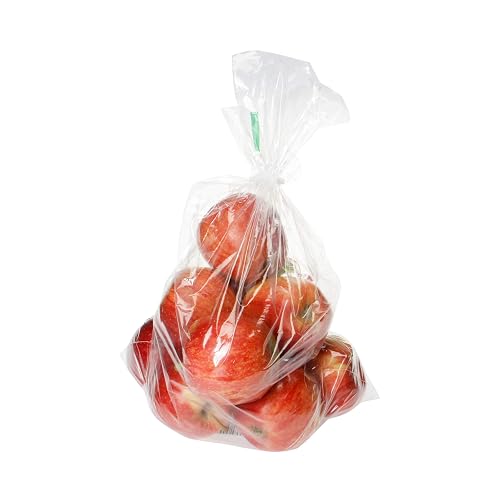
Conventional apples are fresh apples grown using standard farming practices and sold for eating raw, cooking, baking, or juicing. Common types vary in sweetness, tartness, texture, skin color, and size, so selections may suit salads, pies, sauces, or snacks differently.
As an Amazon Associate we earn from qualifying purchases.
This guide does not weigh the price of organic apples against possible long term health differences.
Frequently Asked Questions
Is It Safe to Eat Apple Skin?
Yes, apple skin is safe to eat and is also where most of the fruit’s fiber and some of its nutrients concentrate. Pesticide residue detected in USDA testing sits within EPA tolerances even without peeling. Rinsing the apple under running water for about 30 seconds removes dust, wax, and some surface residue before eating.
Does Washing Apples Remove Pesticide Residue?
Washing removes some surface residue but not what has moved into the wax coating or the flesh. Running water and light scrubbing work better than a plain rinse. Peeling removes more residue than washing alone, though it also removes fiber and some nutrients found in the skin.
Are Organic Apples Pesticide Free?
No, organic apples can still carry pesticide residue, since organic farming allows certain naturally derived pesticides. What organic rules exclude is synthetic pesticides like diphenylamine, which shows up far less often on organic apples than on conventional ones. Testing has found organic samples generally carry lower residue levels and a lower detection frequency than conventional samples.
Why Do Apples Rank High on the Dirty Dozen List Every Year?
Apples rank high because the Environmental Working Group’s list measures how often and how many pesticides are detected, not how dangerous the amounts are. Conventional apples are treated multiple times during growing and storage, including with the post-harvest fungicide diphenylamine, which raises the detection count. A high detection count is not the same as a high health risk under EPA and USDA data.
Conventional apples clear food safety testing by a wide margin, and organic apples clear it with an even wider one. The choice between them comes down to personal preference about farming methods, cost, and how much residue exposure a shopper wants to avoid, not a food safety requirement backed by EPA or USDA data.
References
- Monitoring and Risk Assessment of Multi-Pesticide Residues in Apples: A Focus on Consumer Safety, National Center for Biotechnology Information
- Environmental Working Group’s Annual “Dirty Dozen” List Backgrounder, USApple (US Apple Association)
- About Pesticide Tolerances, U.S. Environmental Protection Agency
- DPA Backgrounder, USApple (US Apple Association)
- USDA Reports 99 Percent of Foods Tested in 2024 Complied with Pesticide Residue Tolerances, Food Safety Magazine
Sources read in September 2026.