
Does Licorice Have Gluten? Brands That Are Safe to Eat

Does licorice have gluten? Most traditional black and red licorice does because wheat flour commonly forms the candy’s dough base. That means familiar products including Twizzlers, Nibs, and Red Vines are not gluten-free.
Gluten-free licorice is available, but the color or flavor alone does not make a product safe. Look for a gluten-free label and check ingredients plus manufacturing information, especially for celiac disease. Options identified as gluten-free include Mom’s Place Gluten-Free Red Licorice, Gimbal’s black licorice Scottie dogs, Jelly Belly Scottie dog candies, and Wiley Wallaby Very Berry, which is certified gluten-free by the GFCO.
Does Licorice Have Gluten?
Standard black licorice and red licorice are therefore often unsuitable for people following a gluten-free diet. That makes a gluten-free label, ingredient list, and manufacturing information central to choosing a product. Amazon offers gluten-free licorice candy for comparing labels and ingredient information before choosing a product.
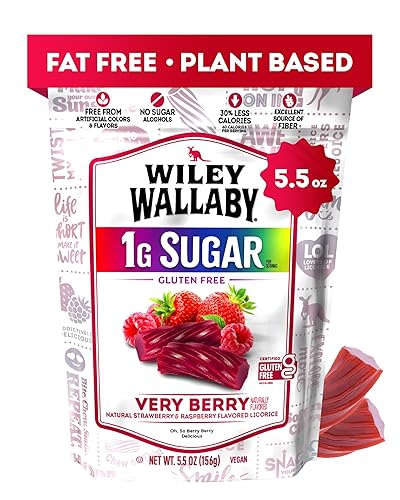
Gluten free licorice candy includes twists, bites, ropes, and chewy pieces made without gluten containing ingredients. Options vary by flavor, texture, candy shape, and whether they use traditional licorice extract, fruit flavors, sugar free sweeteners, or vegan ingredients.
As an Amazon Associate we earn from qualifying purchases.
Wheat flour does more than add a minor ingredient to conventional licorice. During production, flour or starch helps create the dough, contributes to texture, and supports the candy’s finish as it cooks. Because wheat is used as the structural base in many traditional recipes, licorice ingredients can include gluten even when the product is flavored with licorice root, anise, strawberry, cherry, or raspberry. Neither gum arabic nor gelatin answers the gluten question, since the flour or starch base is the key category to check.
Red licorice is not automatically gluten free. Although it generally does not contain licorice root and instead uses fruit flavors, its production process is similar to traditional black licorice. Twizzlers contain enriched wheat flour, making them unsuitable for a gluten-free diet. Likewise, Red Vines contain wheat flour, and Nibs contain gluten.
For black licorice, the presence of licorice-root extract or anise flavor does not determine whether gluten is present. Dedicated gluten-free formulations can use alternatives such as modified potato starch and modified corn starch instead of wheat flour. Shoppers looking for celiac safe licorice candy should first find a product specifically labeled gluten-free, then review its full ingredient list and manufacturer information. Cross-contact can also matter when candy is made in facilities that handle gluten-containing products.
Bottom line: standard licorice is commonly made with wheat flour, while specifically formulated products may be gluten-free. Rather than assuming that red or black licorice is safe, check the individual package every time. People seeking gluten free licorice brands can consider the products.
Why Wheat Flour Is Common in Licorice Candy
Because wheat flour supplies the starchy structure for the dough, it is common in traditional licorice candy. During cooking, that flour helps create the texture and shine associated with finished pieces, rather than serving as a minor flavoring. Rather than judging the candy by its name or color, assess the flour or starch used to build the dough. That means licorice ingredients matter more than the flavor profile when determining gluten status.
Sweeteners such as molasses, sugar, corn syrup, glucose syrup, honey, maple sugar, and artificial sweeteners may appear in black licorice, but they do not reveal what forms its base. Likewise, gum arabic and gelatin can bind ingredients together without answering the central wheat question. Flavorings, colors, and tangy citric acid may shape taste and appearance, yet none replaces a review of the dough base.
Black licorice can get its familiar character from licorice root or anise, but neither flavor route decides if a recipe contains gluten. Red licorice typically uses fruit flavors such as strawberry, cherry, or raspberry. Different flavor sources therefore offer no shortcut for deciding if red licorice is gluten free or black licorice is gluten free.
Binding and shaping also explain why ingredient lists deserve close attention. Licorice is slowly cooked into dough and then shaped through cornstarch molding or extrusion, so the finished candy can look similar even when formulas use different starches or flours in products marketed as traditional, fruit-flavored, red, or black licorice.
For gluten-free formulations, makers can use alternatives to wheat flour, making a specific product label more useful than broad assumptions about a candy category. A product’s ingredient list can identify a wheat-based dough or an alternative starch base, but manufacturing information matters as well.
Careful review also matters. Brands may change formulas or make different flavors differently, so a gluten-free claim on one product does not automatically apply to every item from the same maker. Package details, rather than a familiar flavor, color, or shape, provide the practical basis for a purchase decision at the point of purchase.
Is Red Licorice Gluten Free?
Fruit-flavored licorice is made through a process similar to traditional licorice, so its red color and berry-like taste do not settle the gluten question. It uses fruit flavors instead. Shoppers should judge the individual product rather than relying on its color or flavor name.
Several familiar products contain wheat or gluten. Twizzlers are another example. Nibs should be avoided. Red Vines also contain wheat flour, along with corn syrup, high-fructose corn syrup, citric acid, artificial flavor, and Red 40.
Why Red Licorice Can Be Misleading
Bright coloring, fruit flavor, and citric acid can make red licorice seem different from black licorice, but those features do not indicate a gluten-free recipe. Australia’s Best Recipes identifies both original red and black licorice as candies that contain wheat flour. For someone managing celiac disease or gluten sensitivity, a package described simply as red licorice is not enough to establish that it is suitable for a gluten-free diet.
Some products are specifically formulated and labeled for gluten-free shoppers. Mom’s Place sells Gluten-Free Red Licorice Scottie Dogs made in a gluten-free confectionery on dedicated gluten-free and nut-free equipment in Utah. According to Mom’s Place Gluten Free, its ingredient list includes tapioca syrup, modified potato starch, and modified corn starch rather than wheat flour, with 2% or less of the following: citric acid, carnauba wax, licorice root extract, artificial flavor, vegetable oils, color added, and Red 40.
Other Wiley Wallaby flavors should not be assumed to share Very Berry’s status. Checking the package label, ingredients, and manufacturing information remains the practical step before buying any red licorice.
A Gluten-Free Red Licorice Ingredient Example
Mom’s Place Gluten-Free Red Licorice supplies a labeled ingredient example for gluten-free red licorice. The table identifies a package size, price, and a starch ingredient from that product’s declared list.
| Product | Price | Package | Ingredient-list example |
|---|---|---|---|
| Mom’s Place Gluten-Free Red Licorice | $8.49 | Single 8 oz | MODIFIED POTATO STARCH |
The maker labels its Red Licorice Scottie Dogs gluten-free, dairy-free, nut-free, soy-free, and with no monosodium glutamate (MSG). Mom’s Place says the Scottie Dogs are handcrafted in a gluten-free confectionery and made on dedicated gluten-free and nut-free equipment in Utah, USA.
Good For You Gluten Free identifies the product as handmade and certified gluten-free, describing its Scottie-dog-shaped pieces as soft and tender to the bite. The full product ingredient list appears in the existing product discussion, rather than being repeated here.
Common Brands and Their Stated Status
Named products carry different gluten statements, so a product name alone cannot tell a shopper what belongs in a gluten-free cart. Traditional licorice candy can use other starches or flours in specifically formulated alternatives. That distinction is why category-level answers are less useful than the wording and ingredient details attached to an individual package.
Among familiar products, Twizzlers are one example; other examples also contain gluten. Black licorice presents the same brand-by-brand issue because licorice root or anise determines flavor, not the flour or starch used to form the candy. The comparison below separates standard products from options identified as gluten-free.
| Product or Category | Stated Gluten Status | Key Detail |
|---|---|---|
| Traditional licorice candy | Usually not gluten-free | Most traditional recipes use wheat flour as the dough base. |
| Twizzlers | Not gluten-free | Contains enriched wheat flour. |
| Nibs | Not gluten-free | Contains gluten. |
| Red Vines | Not gluten-free | Lists wheat flour among its ingredients. |
| Wiley Wallaby Very Berry | Gluten-free | Certified gluten-free by the GFCO; the claim applies to Very Berry. |
| Mom’s Place Gluten-Free Red Licorice | Gluten-free | Made on dedicated gluten-free and nut-free equipment. |
Several gluten-free licorice brands have product-specific claims that are worth separating from broader brand assumptions. Wiley Wallaby Very Berry is certified gluten-free by the GFCO, but the cited information applies that status only to Very Berry among Wiley Wallaby flavors. Other identified options are. Product names and flavors still matter when checking a label, especially where a claim is limited to one variety.
Mom’s Place offers a clearer example of a manufacturer-described gluten-free formulation. Its formulation details are. Beyond that, its listed ingredients also include sugar and smaller amounts of other ingredients. Shoppers seeking licorice for a gluten-free diet can use those disclosed formulation and equipment details alongside the package label when deciding what to buy.
Shopping should end with a package check, not a general conclusion about a color, flavor, or brand. Before purchase, look for a gluten-free label, then review ingredients and manufacturer information, including potential cross-contact considerations. Current packaging is the practical final reference, particularly for Gimbal’s, Jelly Belly, and products identified in broader gluten-free licorice brand coverage. That approach keeps the focus on the specific candy in hand and avoids treating all black or red licorice as interchangeable.
How to Choose Celiac Safe Licorice Candy
For people with celiac disease, choose licorice specifically labeled gluten-free, then verify its ingredients and manufacturing information before buying. Candy identified only by its color or flavor does not provide enough information to make it a celiac-safe choice.
Start with the package’s gluten-free claim, but treat that label as the first screening tool rather than the only one. Cross-contact can also be a concern. Manufacturer information can help shoppers assess how a candy is produced and whether dedicated equipment is used.
A Practical Label Check
- Find a clear gluten-free label on the package or product listing before adding licorice to your cart.
- Read the full ingredient list and look for wheat flour, enriched wheat flour, or other wheat-based ingredients used in the candy dough.
- Review any manufacturing statements for information about gluten-containing products, shared facilities, or dedicated gluten-free equipment.
- Compare the current package details with the product information instead of relying on the general category of red or black licorice.
When a package lists wheat flour, it is not suitable for a gluten-free diet. Ingredient lists matter because they identify the dough base. Likewise, a fruit flavor does not show that a product uses a gluten-free dough base.
For online purchases, review the listing carefully before ordering, especially when a retailer carries both conventional and gluten-free licorice. Product pages may identify dedicated production details. Shoppers should also check the package after delivery because formulas and manufacturing details can change.
A gluten-free formulation offers a useful starting point for label review. Careful checking of the label, ingredients, and manufacturing information remains the practical way to select celiac-safe licorice candy.
Gluten Free Licorice Brands to Consider
Several gluten-free licorice brands offer red, black, and fruit-flavored choices, but a gluten-free claim may apply to one product or flavor rather than an entire brand. Among the options identified are Mom’s Place, YumEarth, Candy Tree, Smart Sweets, Gimbal’s, Jelly Belly, and one Wiley Wallaby flavor.
Mom’s Place Gluten Free lists available pack options as single 8 oz, 2-pack 16 oz, and 4-pack 32 oz when in stock.
Red, Black, and Fruit-Flavored Choices
YumEarth makes organic, vegan, gluten-free licorice in original, pomegranate, peach, and black licorice flavors. Candy Tree makes organic, GMO-free, gluten-free red and black licorice in strawberry, cherry, and raspberry varieties, sold as ropes, laces, and bites. Smart Sweets offers gluten-free red licorice twists that are vegan, GMO-free, free from artificial flavors and food dyes, and made with soluble plant-based prebiotic fiber.
Wiley Wallaby requires extra attention because the stated gluten-free status applies only to its Very Berry flavor, which is certified gluten-free by the GFCO. By contrast, that flavor-specific statement should not be extended to other Wiley Wallaby varieties. Gimbal’s black licorice Scottie dogs are identified as gluten-free, while Jelly Belly red and black Scottie dog bite-size candies are also identified as gluten-free.
Retailers also carry broader selections for shoppers seeking gluten-free licorice brands. Licorice International lists 136 gluten-free products, including Licorice Scotties, Red Scotties, Licorice Jelly Beans, and Crows licorice-flavored gumdrops. Together, these choices show that red licorice and black licorice can fit a gluten-free diet when the individual product is specifically sold with that status.
When black licorice is the preference, Gimbal’s Scottie Dogs fits the article’s gluten-free choices because it avoids the wheat-flour issue that makes many traditional licorice candies unsuitable. Even with a product identified as gluten-free, check the package label and manufacturer information before eating it, particularly when managing celiac disease.
What Black Licorice Ingredients Mean for Gluten
Black licorice is not automatically gluten-free, because its flavor ingredients do not determine what forms the candy dough. Instead, the flour or starch base decides the key gluten question.
American makers commonly use anise or aniseed oil rather than licorice-root extract, while makers outside the United States usually use the extract, sometimes with anise oil.
During cooking, that dough is slowly cooked and shaped through cornstarch molding or extrusion. Because wheat is integral to the base rather than simply a flavoring, conventional black licorice commonly contains gluten.
Sweeteners such as molasses, sugar, corn syrup, glucose syrup, honey, maple sugar, or artificial sweeteners can appear in black licorice, yet none reveals the gluten status of its base. Likewise, gum arabic and gelatin are among the ingredients that help bind ingredients together, but they are not the deciding category. Dutch and Finnish styles use ammonium chloride rather than sodium chloride for a salty flavor, a regional detail that also does not settle the question.
Alternative starches or flours can produce gluten-free black licorice, which is why the name, color, or root-and-anise flavor cannot answer is black licorice gluten free for a particular package.
Labels matter more than assumptions: products formulated with other starches or flours can use a non-wheat base, yet processing information remains relevant for anyone avoiding gluten. Checking both details keeps the focus on the ingredient category that determines the answer for shoppers.
Frequently Asked Questions
Does All Licorice Contain Wheat Flour?
No. Most traditional licorice uses wheat flour as the starchy base for its dough, but gluten-free versions can use other starches or flours. Black or red licorice alone does not identify a product’s gluten status, so shoppers should check the individual package.
Is Red Licorice Gluten Free?
Red licorice is not automatically gluten-free. It usually uses a process similar to traditional licorice, and products such as Red Vines contain wheat flour. Fruit flavorings, colors, and citric acid do not change the need to check the dough base and package label.
Are Twizzlers Gluten Free?
No. Twizzlers contain enriched wheat flour and are not gluten-free. People following a gluten-free diet should avoid them.
Is Black Licorice Gluten Free?
Black licorice is not automatically gluten-free because most traditional versions use wheat flour. Its licorice-root or anise flavor does not determine its gluten status. Some black licorice products are formulated with gluten-free starches or flours, so the package label matters.
Which Gluten Free Licorice Brands Are Available?
Options identified as gluten-free include Mom’s Place Gluten-Free Red Licorice, Gimbal’s black licorice Scottie dogs, Jelly Belly red and black Scottie dog candies, YumEarth, Candy Tree, and Smart Sweets red licorice twists. The Wiley Wallaby claim applies only to Very Berry. Confirm current labels before buying, especially when choosing a specific flavor.
What Should People with Celiac Disease Check Before Buying Licorice?
Look for a gluten-free label, then review the ingredient list for wheat flour and check the manufacturer’s manufacturing information. Licorice can face gluten cross-contact when it is made in facilities that handle gluten-containing products. People with celiac disease should not rely on the candy being red, black, fruit-flavored, or labeled simply as licorice.
Most standard licorice, including many familiar red and black varieties, commonly contains wheat flour. Gluten-free alternatives are available, but safety depends on the specific product rather than its color, flavor, or candy shape. Choose a product labeled gluten-free, inspect its ingredients, and review manufacturing details where provided. For celiac disease, checking for possible gluten cross-contact is as necessary as avoiding wheat-based dough.
References
- What Is Licorice Made Of? | Licorice.com, licorice.com
- gluten.guide, gluten.guide
- Reddit – The heart of the internet, Reddit, reddit.com
- Gluten Free Liquorice Sweets | Over 180 varieties in stock, Liquorice Heaven, liquoriceheaven.com
- licorice, licorice, bestrecipes.com.au
- Gluten Free, Licorice International, Licorice International, licoriceinternational.com
- 8 Gluten-Free Licorice Brands to Try – Good For You Gluten Free, Good For You Gluten Free, goodforyouglutenfree.com
- Gluten-Free Red Licorice – Mom’s Place Gluten Free, Mom’s Place Gluten Free, momsplaceglutenfree.com
Sources read in September 2026.