
Do Cherries Need to Be Organic? Pesticide Facts

Do cherries need to be organic? Not necessarily; USDA organic rules require that foods carrying a USDA Organic seal be at least 95% organic under 7 CFR Part 205, but there are no cherry-specific pesticide-residue testing results in the monitoring material available, and USDA’s Pesticide Data Program is the national residue monitor that informs EPA tolerance assessments.
For shoppers asking about cherries Dirty Dozen status, EWG includes cherries on its 2026 Dirty Dozen list, and cherries face substantial pest pressures listed by UC IPM, so growers use various tools in integrated pest management, while federal food-safety guidance still advises washing produce, washing hands for 20 seconds before and after preparing produce, and refrigerating perishable items at or below 40 degrees to reduce foodborne-illness risks that affect about 48 million people annually.
Do Cherries Need to Be Organic
Buying cherries does not consistently require organic labeling to produce a meaningful reduction in pesticide-residue exposure for most shoppers. Federal tolerance-setting and monitoring aim to keep residues in food below levels regulators consider safe, and U.S. monitoring programs generally find residues absent or well under those limits for most tested commodities. Consumer choices still matter. Available evidence contains no cherry-specific pesticide-residue testing results to show whether cherries as a commodity differ from other fruits in routine monitoring. For those who prefer organic options, Amazon offers organic cherries to compare online.

Organic cherries are fresh stone fruits grown under organic farming standards and sold for snacking, baking, preserves, and cooking. Compare sweet and tart varieties, fresh or frozen forms, whole or pitted fruit, and package size based on intended use.
As an Amazon Associate we earn from qualifying purchases.
What the Data Shows
USDA’s Pesticide Data Program provides the most comprehensive pesticide-residue database in the United States and helps EPA assess dietary exposure, but no cherry-specific 2024 or 2026 residue result is established. EPA establishes tolerances that define maximum allowed residues, and monitoring by USDA and FDA checks actual levels against those tolerances.
Historical context in the supplied extracts noted that more than 99 percent of U.S. produce samples in a cited year had no residues or had levels well below EPA tolerances, which helps explain why choosing organic does not guarantee a substantially different margin of safety for every commodity.
Still, the absence of cherry-specific PDP data means that a direct, apples-to-apples comparison between organic and conventional cherries cannot be drawn from the material available here.
Federal regulations list USDA organic rules that describe the practices and prohibitions that differentiate certified organic fruit from conventional fruit, and those rules are contained in 7 CFR Part 205 under the National Organic Program.
UC IPM guidance notes that cherry production involves many pests and disease pressures, so growers use a range of tools in integrated pest management programs, and those management needs do not equate to documented higher consumer residues in cherries. For shoppers concerned about exposure but lacking cherry-specific residue information, practical steps such as washing fruit under running water and removing damaged areas follow federal food-safety advice applicable to fresh produce.
Ultimately, whether to buy organic cherries depends on budget, availability, and personal priorities about production practices rather than clear-cut residue differences demonstrated in the supplied monitoring material. Market choices can reflect preferences for organic standards, avoidance of specific active ingredients, or support for certain farming systems, but the supplied regulatory and monitoring context does not provide cherry-targeted residue results that prove a material exposure gap between organic and conventional cherries.
What Organic Certification Means for Fruit
Cherries sold as USDA Organic must meet federal organic standards that restrict most synthetic pesticides, prohibit genetic modification, and require defined production and handling practices.
Under the Organic Foods Production Act of 1990 the U.S. Department of Agriculture established the National Organic Program to write and enforce those rules.
USDA regulations appear in 7 CFR Part 205 and cover organic standards, prohibited practices, production and handling requirements, and the National List of Allowed and Prohibited Substances.
Organic certification follows inspection of crop soil and records to confirm that most synthetic pesticides and fertilizers were not used and that seeds and inputs meet program rules.
Allowed and Prohibited Practices
Allowed production inputs are limited to substances on the National List, while the use of genetically modified seedstock and most synthetic pesticides and fertilizers is not permitted for certified organic fruit.
That seal follows the program’s ingredient requirements.
Only operations that pass annual inspections and maintain required documentation may use the USDA Organic label, and certifiers enforce those requirements through records and on-site reviews.
Administrator discretion can grant temporary variances in exceptional circumstances such as Secretary-declared natural disasters, severe weather damage, or business interruptions that affect organic production or handling.
Variances and policy guidance are documented in program lists and the NOP Handbook, which provides instructions, guidance, and historical context for rulemaking and enforcement.
Certification affects both farm practices and postharvest handling because organic rules address production, transport, and processing steps to maintain the organic integrity of fruit.
Consumers who choose organic fruit are buying products produced under a regulated system that aims to limit synthetic inputs and to ensure labeling accuracy, while individual price and availability outcomes vary across markets.
Regulation and Residue Monitoring in the United States
Federal regulation and monitoring determine how tolerance levels are set and how residue testing appears in public reports, even when commodity-specific data for cherries are limited.
At the agency level, the Environmental Protection Agency sets tolerances, which are the maximum amounts of a pesticide legally allowed to remain on or in food. Those tolerances are intended to protect public health through dietary risk assessments and by limiting uses that would produce unsafe residues. EPA also maintains tools such as a pesticide use index, crop grouping information, and calculators that support both registrants and risk reviewers. Agency actions may include setting, revising, or revoking tolerances based on new data or changed understanding of risk.
How Monitoring Works
USDA runs a national monitoring program called the Pesticide Data Program that samples and tests many commodities to build a residue database. It focuses on items eaten by infants and children, and the program supports regulatory use by providing data for dietary exposure calculations. PDP operates with state agriculture departments and distributes results that other agencies use to inform public policy and trade decisions. Program contacts are available for data questions at amsmpo.data@usda.gov or by phone at 202-572-8177.
Monitoring produces reports rather than setting regulatory limits, and those reports are compared to EPA tolerances to assess compliance and exposure. Samples with measurable residues can still fall well below tolerances, and monitoring data help identify commodities that warrant further scrutiny. Risk assessors combine residue measurements with consumption data to estimate dietary exposure and decide whether any regulatory action or additional study is needed. Periodic updates and targeted sampling also support export market requirements and international trade confidence.
Below is a concise table summarizing roles and relevant program facts drawn from federal and program descriptions.
| Agency or Program | Primary Role | Notable Fact |
|---|---|---|
| EPA | Sets pesticide tolerances and performs dietary risk assessments | Provides use indexes and crop-grouping guidance |
| USDA Pesticide Data Program | Samples and tests commodities for pesticide residues | Prioritizes items consumed by infants and children |
| State Agriculture Departments | Partner in sampling and testing under PDP | Work with USDA on national monitoring |
| Monitoring Reports | Compare measured residues with EPA tolerances | Inform dietary-exposure assessments and trade |
Pest Pressure and Common Cherry Management Needs
Cherries face a wide range of insect, mite, disease, weed, and vertebrate pressures that make pest management intensive. Production requires year-round attention across stages labeled Dormancy, Bloom, Fruit Development, Preharvest Through Harvest, and Postharvest, according to California pest-management guidance.
UC guidance lists numerous insect and mite pests that commonly affect cherries, including American Plum Borer, Black Cherry Aphid, Brown Mite, Cherry Leafhopper, Cherry Slug, Cribrate Weevil, European Earwig, European Fruit Lecanium, European Red Mite, Fruittree Leafroller, Green Fruitworms, Mountain Leafhopper, Obliquebanded Leafroller, Orange Tortrix, Oriental Fruit Moth, Pacific Flatheaded Borer, Peach Twig Borer, Peachtree Borer, Redhumped Caterpillar, San Jose Scale, Shothole Borer, Spotted-Wing Drosophila, Webspinning Spider Mites, and Western Flower Thrips. Listed pests can affect yield, fruit quality, and harvest timing, prompting growers to combine monitoring and timely controls.
Diseases and Other Threats
Plant diseases also pose persistent challenges, with named problems that include Armillaria Root Rot, Bacterial Canker, Botrytis Blossom Blight, Brown Rot Blossom and Twig Blight, Cherry Crinkle Leaf And Deep Suture, Cherry Mottle Leaf, Cherry Necrotic Rusty Mottle, Cherry Rasp Leaf, Cherry Rugose Mosaic, Cherry Stem Pitting, Crown Gall, Cytospora Canker, Eutypa Dieback, Phytophthora Root and Crown Rot, Powdery Mildew, Prune Dwarf, Ripe Fruit Rot, Tomato Ringspot, Wood-Decay Fungi, and X-Disease.
Other categories addressed in guidance cover nematodes, vertebrate pests such as birds and pocket gophers, and a broad set of weed-management issues.
Management tools described in the guidance span conventional pesticides, biocontrols, and natural products, with specific sections on Fungicide Efficacy for Cherry Diseases and fungicide-resistance management. Herbicide information includes Integrated Weed Management, Weed Management in Organic Orchards, a Herbicide Treatment Table, and a note about herbicide resistance for glyphosate.
Growers typically use monitoring, application checklists, and general IPM practices to mitigate hazards and protect natural enemies and pollinators. Guidance updates and referenced resources such as fungicide tables, photo repositories, and regional research centers support adaptive management during ongoing pest and disease pressure.
Consumer Food Safety and Handling for Cherries
No, cherries do not have to be organic to reduce contamination risk, because careful handling and washing at home lower the chance of foodborne illness for fresh fruit. Follow basic produce-safety steps that federal food-safety guidance recommends to reduce contamination from farm to fork.
Wash your hands with warm water and soap for 20 seconds before and after preparing cherries, following U.S. Food and Drug Administration advice. Choose fruit that is not bruised or damaged when you buy it, and keep pre-cut or bagged fruit refrigerated or on ice while shopping and at home to limit bacterial growth.
Stepwise Washing Method
- Rinse cherries under plain running water and gently rub each piece with your hand to help remove dirt and microbes.
- Do not use soap, produce wash, or other detergents when cleaning cherries, since FDA guidance advises against those products.
- Brush only firm produce when needed, but for cherries a gentle rub under running water is sufficient to wash the surface.
- Cut away any bruised or damaged areas before eating, because visible damage can hide contamination and degrade quality.
- Dry cherries with a clean cloth or a paper towel after rinsing to remove residual moisture and reduce surface transfer of microbes.
After handling cherries, clean and sanitize knives, cutting boards, and countertops to prevent cross contamination with ready to eat foods. Store perishable fruit at or below 40 degrees Fahrenheit and use it within a few days for best quality and safety, because refrigeration slows bacterial growth.
Remember that nearly 48 million people in the United States become ill from contaminated food each year, so routine precautions matter even for small fruit such as cherries. If you buy pre-cut or prepared cherry items, keep them cold, check that packaging has been handled and stored properly, and follow the same washing and storage steps before serving.
How to Weigh Cost, Access, and Exposure
Organic cherries should be prioritized when the price premium and availability fit your budget and eating habits, and when you want the additional certification assurances that come with organic labeling. Consider how often your household eats cherries and whether a price increase of 10 to 50 percent fits your grocery plan.
Compare the value of organic purchases against other food priorities before you commit to higher-cost fruit. For families that buy many different organic items, spreading budget impact across staples may make organic fruit more affordable. Decide which produce you and your household eat most often and allocate organic spending there if reducing potential residues is a chief concern. Remember that, national organic sales reached $35.9 billion in 2014, which reflects consumer demand but does not dictate individual choices.
Balance access and timing when cherries are seasonal or out of season at higher cost. When fresh domestic cherries are scarce, imported fruit or frozen options can be more economical while still providing nutritional benefits. Frozen cherries may allow you to buy more fruit for the same money and reduce waste because they keep longer. Keep in mind routine food-safety steps such as washing and proper refrigeration to reduce contamination risks.
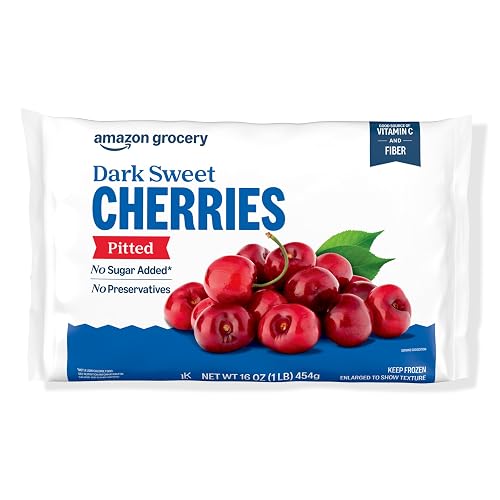
Frozen cherries are pitted cherries preserved at low temperatures for use in smoothies, baking, sauces, and desserts. Compare sweet or tart varieties, whole or chopped fruit, added sugar or unsweetened options, and package sizes suited to different recipes and storage needs.
As an Amazon Associate we earn from qualifying purchases.
Ask a few practical questions at the store or market to refine the decision. Which growers or brands do you trust, and is organic certification clearly labeled on packaging? How has the produce been handled and stored, and does the price difference justify the purchase for frequent consumption? Choose what fits your health priorities, budget, and local availability rather than assuming one universal answer.
Plan a flexible approach that mixes organic and conventional purchases based on cost, variety, and how often you eat cherries. For occasional treats, conventional cherries can be fine when handled safely, while regular consumers may prefer organic despite higher prices. Adapt choices seasonally and shop sales or farmers markets to stretch dollars without sacrificing produce quality.
Questions to Ask at the Store or Market
Short answer: not always; think about how often you eat cherries, your budget, and whether you prefer to reduce potential exposures where feasible.
Before buying, ask vendors whether the fruit was grown organically or under integrated pest management, and request a quick description of postharvest handling. Many small-scale growers will explain spray schedules or offer specifics about harvest and storage practices. If a seller hesitates or cannot answer, that uncertainty can guide a conservative choice.
When shopping, consider asking about where the cherries were grown and how long they have been in transit or storage. Local fruit often reaches market sooner and may need fewer postharvest treatments than long-shipped stock, and shorter time from tree to table can affect flavor and perceived freshness. Farmers market vendors can usually say whether fruit was refrigerated, how it was packed, and whether they sell an organic option nearby. Grocery produce managers may supply country-of-origin labels and occasional signage about organic lots.
Another practical question concerns visible condition: look for fruit that is firm, glossy, and free of obvious damage or mold. Refrigeration at the point of sale matters for perishable fruit, so note whether cherries are kept at or below typical refrigerator temperatures. If you plan to store cherries at home, ask how long they might hold and whether washing instructions differ for that variety. Simple handling steps can reduce food-safety risks and help preserve quality.
Budget-focused shoppers can ask about sale timings, bulk discounts, or seconds that are suitable for immediate use or freezing. Freezing bruised or slightly imperfect cherries preserves nutrition and avoids waste while stretching dollars. If organic prices are a barrier, request guidance on which varieties the seller sees more often in organic form or which times of season prices drop. Seasonal timing often affects availability and cost most directly.
Finally, request clarification on labeling when shopping online or at large retailers to confirm whether “organic” claims are certified and not informal descriptions. Many stores list USDA Organic certification where applicable, and certification details can help you decide if the premium aligns with your priorities. Choosing confidently means asking concise questions and comparing answers across vendors to match your preferences for cost, exposure, and quality.
This guide does not estimate how much washing removes from cherries; rinse them under plain running water instead.
Frequently Asked Questions
Are Pesticide Residues on Cherries Common?
Cherries are not singled out in the supplied monitoring data, and the material contains no cherry-specific pesticide-residue testing results. The USDA Pesticide Data Program produces the most comprehensive U.S. residue database, but no cherry-specific findings are reported. Historical context in the material says more than 99 percent of U.S. produce samples in 2016 had no residues or levels well below EPA tolerances, though that figure is for produce generally, not cherries.
Does a USDA Organic Label Guarantee Zero Pesticides on Cherries?
USDA organic rules require that crop land have had no prohibited substances applied for three years before harvest, and only foods that are at least 95 percent organic may bear a USDA Organic seal. Organic certification forbids genetic modification and restricts many synthetic inputs, but organic fruit is not guaranteed to have zero pesticide residues. Harvard summarises that organic produce may have fewer residues, while residues in both organic and conventional produce were reported as within levels judged safe for consumption.
Will Washing Cherries Remove Pesticide Residues and Germs?
Federal guidance for fresh produce advises rinsing under plain running water and gently rubbing produce, and it says not to use soap or produce wash; washing can remove residues and other contaminants. The FDA guidance also recommends washing hands for 20 seconds before and after preparing produce, cutting away bruised areas, brushing firm produce when appropriate, and refrigerating perishable items at or below 40 degrees. These practices reduce the risk from germs and may lower surface residues, though no cherry-specific residue-removal data are available.
Do Monitoring Programs Test Cherries Specifically?
USDA Pesticide Data Program conducts national pesticide-residue monitoring and emphasizes commodities consumed by infants and children, working with state agriculture departments and other agencies. PDP is described as the most comprehensive U.S. residue database, but it also notes a gap: no cherry-specific pesticide-residue testing results were included. EPA sets tolerances and assesses dietary risk, and USDA testing data support those assessments, yet available data do not include cherry-targeted test results.
Should Children Avoid Conventional Cherries?
Children receive special attention in the material because they eat more food relative to body weight and have different vulnerabilities, and monitoring programs emphasize protecting infants and children in sampling. Harvard and other summaries cited in the material indicate that residues in both organic and conventional produce were within levels judged safe, and an American Academy of Pediatrics review found no clear nutritional advantage for organic over conventional. Practical steps such as choosing undamaged fruit, washing produce, and following refrigeration guidance help reduce exposure risks for all consumers, including children.
Takeaway: U.S. systems provide organic certification, residue monitoring, and tolerance setting, but no cherry-specific residue test results or EPA tolerance figures are available. Consumers who want to reduce exposure can follow FDA handling steps: choose undamaged fruit, rinse cherries under running water, wash hands for 20 seconds, and refrigerate perishable produce at or below 40 degrees. Organic certification limits many synthetic inputs, and monitoring programs aim to keep residue levels within regulatory limits.
References
- Organic Regulations, USDA Agricultural Marketing Service
- Should you go organic?, Harvard Health
- Pesticide Data Program, USDA Agricultural Marketing Service
- Regulation of Pesticide Residues on Food, U.S. Environmental Protection Agency
- Cherry / Agriculture: Pest Management Guidelines, UC Statewide IPM Program
- 7 Tips for Cleaning Fruits, Vegetables, U.S. Food and Drug Administration
- EWG’s Shopper’s Guide to Pesticides in Produce | Dirty Dozen, Environmental Working Group
- Pesticide residue, Wikipedia
Sources read in September 2026.