
Are Watermelons GMO? Seedless and Yellow Watermelon Facts

No watermelon sold in the United States is a GMO, or genetically modified organism. Seedless, yellow, mini, and traditional red watermelons all come from selective breeding and natural genetic variation, never from genetic engineering. The National Watermelon Association states plainly that no watermelon, seedless or otherwise, is genetically modified, and the Non-GMO Project confirms there are currently no GMO watermelons on the market. Seedless fruit comes from crossing plants with different chromosome counts, a technique growers have used since 1939. Yellow flesh comes from a natural gene variant that blocks the pigment that normally turns melons red. Neither process inserts foreign DNA into the plant.
Why Some People Think Watermelon Might Be GMO
Shoppers question watermelon’s GMO status because seedless fruit looks like something a laboratory invented. A watermelon that produces no seeds at all feels unnatural next to a traditional melon, and terms like chromosome doubling and colchicine sound like biotechnology jargon rather than ordinary farming.
Farmers markets and grocery chains rarely explain the breeding process on the sticker, so the assumption spreads on its own. Cube-shaped and mini watermelons add to the confusion, since both look engineered even though neither involves altering a single gene.
Every one of these varieties traces back to plant breeding methods that are older than modern genetic engineering itself. Social media adds another layer, since a photo of a cube-shaped melon or a bright yellow slice travels fast and rarely comes with an explanation of how growers actually produced it.
How Seedless Watermelons Are Made
Seedless watermelons come from crossing two parent plants with different chromosome counts, a method called hybridization that farmers have used for more than 80 years. Breeders never insert foreign genes into the plant at any stage, a point the Non-GMO Project makes directly in its own explanation of the process.
The technique starts with a chemical treatment on a diploid watermelon, then moves through several generations of controlled pollination before the seedless fruit reaches a grocery shelf. Bees carry out the final pollination step in the field, just as they would with any conventional crop.
| Watermelon type | How it is produced | GMO status | Seed details |
|---|---|---|---|
| Seeded watermelon | Conventional watermelon reproduction | No | Mature seeds form |
| Seedless watermelon | A 22 chromosome pollen parent crosses with a 44 chromosome female flower | No, traditional breeding | Triploid fruit has 33 chromosomes and immature white seed coats |
| Yellow watermelon | Inherited flesh color variation through crossbreeding and cultivation | No | Can be seeded or seedless |
The Diploid, Tetraploid, and Triploid Cross
Growers create seedless watermelon by crossing a diploid plant, which carries two sets of chromosomes, with a tetraploid plant, which carries four. The offspring is triploid, meaning it carries three sets of chromosomes, and three sets cannot divide evenly during seed formation.
That mismatch is what makes the fruit sterile and seedless. The result resembles how a mule forms when a horse breeds with a donkey: both parents are fertile, but the hybrid offspring is not. Scientists have used this style of cross since long before genetic engineering existed as a field.
What Colchicine Actually Does
Colchicine is a natural chemical extracted from the autumn crocus plant, and breeders use it to double the chromosome count in a diploid watermelon seedling. Treated seedlings grow into tetraploid plants, the four-chromosome-set parent used in the cross described above.
This process does not insert foreign DNA, and it is not the same as the biotechnology techniques used to create GMOs. Colchicine has been used in plant breeding for decades, long before the term GMO existed in common use. The chemical never ends up in the fruit a shopper eventually eats.
A Worked Example from Seed to Seedless Fruit
The process below shows how a single seedless watermelon reaches a store shelf, using the chromosome numbers reported by breeders.
- Grow the tetraploid parent. Treat diploid watermelon seedlings with colchicine so they develop four sets of chromosomes instead of two.
- Cross the parents. Pollinate a 44-chromosome tetraploid female plant with pollen from a 22-chromosome diploid male plant.
- Get triploid seed. The cross produces seed that grows into a triploid plant carrying 33 chromosomes, an odd number that cannot divide evenly.
- Plant the triploid field. Farmers plant the triploid seed alongside a diploid pollinator variety, usually in a ratio of about three triploid rows to one diploid row.
- Let bees finish the job. Bees carry pollen from the diploid rows to the triploid flowers, which triggers fruit development without viable seeds forming inside.
Every triploid watermelon sold today, red or yellow, follows this same basic sequence. Nothing in these five steps resembles the DNA-splicing or gene-insertion methods used to create an actual GMO crop.
Is Yellow Watermelon GMO?
Its flesh color comes from a natural gene variant that blocks lycopene production, the same pigment responsible for red watermelon flesh, so the fruit accumulates yellow-orange compounds called xanthophylls instead.
Breeders identified this trait in existing wild and cultivated watermelon populations and selected for it over generations, a method called marker-assisted selection. No genetic engineering or foreign DNA was involved at any point. Yellow watermelon has existed since long before biotechnology, with African cultivation records stretching back roughly 4,000 to 5,000 years.
What Makes the Flesh Yellow Instead of Red
Two genes control canary-yellow watermelon flesh: the C locus, known as the LCYB gene, and a second locus called C2, carried on chromosome 2. A mutant version of LCYB blocks an enzyme called lycopene beta-cyclase, which normally converts lycopene into beta-carotene.
When that conversion stops, lycopene never builds up and the flesh never turns red, leaving the yellow xanthophylls visible instead. Researchers mapped this pathway through a published genetic study rather than by inserting new genetic material. The trait behaves exactly like any other naturally occurring plant variation, similar to why some apples are golden instead of red.
What Is the Difference Between Genetically Modified and GMO?
Genetically modified describes any change to a plant’s genetic makeup, including traditional cross-breeding, while GMO refers specifically to organisms altered through direct genetic engineering in a lab. Seedless watermelon fits the first definition because its chromosome count changes through hybridization, not the second, because no one inserts foreign genes into its DNA.
The Genetic Literacy Project makes this distinction directly, noting that seedless watermelon uses techniques that have existed in agriculture for generations rather than anything engineered or synthetic. That difference matters for consumers who avoid GMO products specifically, since seedless watermelon does not fall into that category under any standard definition. Every certified Non-GMO Project verification for watermelon reflects this same reasoning.
When Were Seedless Watermelons First Developed?
Seedless watermelons were first developed in Japan in 1939, decades before genetic engineering existed as a field of science. Breeders spent the following decades refining the triploid crossing method until it became reliable enough for commercial farms. By the early 2000s the technique had spread worldwide, and seedless fruit gradually overtook traditional seeded melons in grocery stores.
Today, seedless watermelon accounts for roughly 92 percent of all watermelon sold, making it the variety most American shoppers actually buy. Seeded watermelon still exists and remains popular with gardeners who prefer to save their own seeds. Commercial growers switched to seedless varieties mainly because shoppers preferred the convenience, not because regulators required any change in how the fruit was bred.
Are Cube-Shaped and Mini Watermelons GMO?
Growers create cube-shaped melons by placing a young fruit inside a rigid, translucent mold while it is still small, and the fruit simply grows to fill the mold’s shape as it matures. Mini watermelons come from ordinary selective breeding, where growers repeatedly choose the smallest, sweetest fruits from a crop and replant their seeds over successive generations.
Both techniques rely on physical shaping or conventional selection, the same tools farmers have used for centuries. Novelty shapes cost more per pound because the molds and extra handling add labor, not because the fruit inside is any different from a standard melon.
Can You Find Organic Seedless Watermelon?
Organic seedless watermelon is widely available, since the breeding process does not involve genetic modification or require synthetic pesticides. Farms can grow triploid seedless plants under standard USDA organic rules as long as they skip prohibited synthetic inputs and follow approved soil and pest management practices. All watermelon sold in the United States, organic or conventional, must also meet FDA standards under the Food Safety Modernization Act, which covers contamination and handling rather than genetic status. Shoppers looking for organic fruit should check for the USDA organic seal on the label or ask the seller directly, since non-GMO and organic are not identical claims even though every watermelon already qualifies as non-GMO.

Seedless watermelons are fresh melons grown to produce small, soft edible seed traces instead of mature black seeds. They are commonly sliced for snacking, fruit salads, drinks, and desserts. Compare whole or pre cut formats, melon size, flesh color, ripeness, and whether the fruit is certified organic.
As an Amazon Associate we earn from qualifying purchases.
How to Identify Watermelon Varieties When You Shop
Retail watermelon is usually labeled by shape, color, or seed count directly on the produce sticker, so reading that sticker is the fastest way to identify what a shopper is buying. Seedless watermelon typically carries a small round sticker marked seedless, while seeded melons rarely carry any special marking at all. Yellow-fleshed watermelon is almost always labeled yellow on the sticker or the bin sign, since the rind looks nearly identical to a red-fleshed melon from the outside.
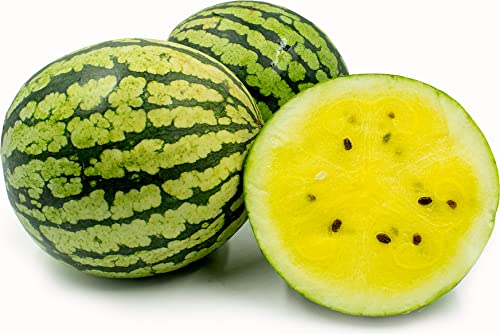
Yellow watermelons have golden flesh instead of the familiar red or pink interior, with a sweet flavor and crisp, juicy texture. They are eaten fresh, added to fruit salads, or blended into drinks. Compare whole versus cut fruit, seedless varieties, size, ripeness, and growing origin.
As an Amazon Associate we earn from qualifying purchases.
Reading the Sticker and Rind
A watermelon’s rind pattern offers a rough clue but not a reliable one, since stripe width and color vary across dozens of cultivars regardless of seed count or flesh color. The produce sticker or the sign above the bin is the only dependable source, and larger grocery chains print the variety name directly on it in most cases. Farmers market vendors are usually happy to answer a direct question about a specific melon’s variety and growing method.
Checking for a Non-GMO or Organic Label
Third-party verification comes from a Non-GMO Project Verified butterfly logo, though it is not strictly necessary for watermelon since no GMO version exists to avoid in the first place. A USDA organic seal indicates the farming method, including soil health and pesticide practices, rather than genetic status. Shoppers who want both organic farming and confirmation of non-GMO status can look for a melon carrying either or both seals, though a missing seal does not mean a watermelon is genetically modified.
This guide does not compare watermelon varieties by taste, price, or quality; this page explains how seedless and yellow fruit are bred.
Frequently Asked Questions
Is Watermelon Safe to Eat if It Has No Seeds?
Seedless watermelon is safe to eat and nutritionally similar to seeded varieties. It sometimes contains a few small white, undeveloped seed coats near the center, which are soft and edible. These are not genetic defects, just remnants of the triploid breeding process described above.
Does Colchicine Stay in the Fruit You Eat?
No, colchicine only touches the seedling during the chromosome-doubling step, long before the plant ever produces fruit. By the time a watermelon ripens on the vine, no colchicine residue remains in the flesh. Regulatory food safety testing has found no evidence of chemical carryover in commercial seedless watermelon.
Are All Seedless Fruits Made the Same Way?
Not exactly, though many follow a similar chromosome-based principle. Seedless grapes and bananas, for example, often rely on different combinations of natural mutation and vegetative propagation rather than the diploid-tetraploid cross used in watermelon. Each seedless crop has its own breeding history, but none of the common seedless produce sold in US grocery stores is a GMO.
Is Organic Watermelon Different from Non-GMO Watermelon?
Yes, the two labels mean different things even though they overlap in practice. Organic status covers how the fruit was farmed, including soil health and pesticide use, while non-GMO status covers genetic origin. Every watermelon on the market already qualifies as non-GMO, so an organic label adds information about farming methods rather than genetic safety.
Will Scientists Ever Create a GMO Watermelon?
It is possible in theory, but no GMO watermelon exists commercially as of September 2026. Breeders currently have no need for genetic engineering because cross-breeding already produces seedless, colorful, and disease-resistant varieties. Any future GMO watermelon would require regulatory approval and clear labeling before reaching US grocery shelves.
Every watermelon sold today, whatever its color, shape, or seed count, comes from selective breeding and hybridization rather than genetic engineering. Shoppers who avoid GMO products can buy seedless, yellow, mini, or cube-shaped watermelon without contradicting that choice. The science behind each variety is well documented by agricultural researchers and industry groups alike, and none of it involves inserting foreign DNA into the fruit.
References
- Watermelons are GMO-free, Safe, and Grown with Care, National Watermelon Association
- That Watermelon Isn’t a GMO. The Science Behind Seedless, Cubed and Colorful Melons, Non-GMO Project
- Why Are Seedless Watermelons ‘Genetically Modified’ But Not Considered GMOs?, Genetic Literacy Project
- Are Seedless Watermelon Gmos?, Daily Meal
- What Is Yellow Watermelon? Natural Or Man-Made GMO?, Back Garden
- Are Seedless Watermelon GMO?, Ask Mary Stone
- Facts & FAQs, Watermelon Board
- Identification of a Novel Locus C2 Controlling Canary Yellow Flesh Color in Watermelons, NCBI
Sources read in September 2026.