
Who’s Going to Carry the Boats? Meaning and Whose Boat It Is

“Who’s going to carry the boats?” is a challenge rather than a real question, and it belongs to David Goggins. He shouted it at his Navy SEAL boat crew during Hell Week, when worn out men had to haul an inflatable boat weighing more than 200 pounds through deep sand and cold surf. Stripped to its meaning, the line tells a room of tired people that the load is not going anywhere, and whose shoulders take it decides whether the crew keeps moving or stalls. Goggins answered by picking up his end first. Anybody can borrow the phrase, because everyone has some boat they would rather set down.
The Facts Behind the Quote at a Glance
Goggins built the phrase inside Navy SEAL Basic Underwater Demolition/SEAL training, known as BUD/S, at Coronado, California. The boats are the craft described earlier.
| Aspect | Detail |
|---|---|
| Training program | Navy SEAL BUD/S (Basic Underwater Demolition/SEAL) |
| Location | Coronado, California |
| Training phase | Hell Week |
| Goggins’ crew | Boat Crew Two |
| Goggins’ class | Class 235 |
| Boat weight | Over 200 pounds |
| Hell Week completed | 2001, on his third attempt |
| Team assigned | SEAL Team 5 |
| Injuries worked through | Stress fracture, pneumonia |
| Memoir | Can’t Hurt Me: Master Your Mind and Defy the Odds, published December 4, 2018 |
Accounts of his class and that memoir supply the details above. None of the sources for this article is a Navy press release, so read the figures as well documented recollections of a training class rather than as official service records. As of September 2026, no source consulted here disputes any of them.
Where the Boats Question Comes From
The question comes from Hell Week, the stretch of BUD/S widely described as one of the toughest weeks of military training anywhere. Goggins yelled it at his crew while they carried their boat and the men around him were quitting.
Coronado sits on a strip of San Diego beach, and the course uses that terrain hard. Crews move through deep sand, into the surf, and back out again, cold and short of sleep for days at a stretch. Fatigue does the real filtering, not the boat. As teammates dropped out, the candidates still standing grew frustrated, low, and mentally worn, which is exactly the moment the shout was built for.
What a Hell Week Boat Crew Carries
Each crew carries the inflatable boat. Candidates are split into crews for the week, and the boat goes almost everywhere with them, overhead or balanced on their heads, through sand that gives way under every step.
Weight alone would be nothing much for a fit person over a short distance. Hours of it, in cold water, without sleep, is a different problem entirely. Crews that lose members do not get a lighter boat; the same 200 plus pounds simply spreads across fewer sets of shoulders, and that mechanic is what the whole quote turns on.
Goggins, Boat Crew Two and Class 235
Goggins trained with Boat Crew Two in Class 235. Crews at BUD/S are built as the unit that succeeds or fails together, and Boat Crew Two is the specific set of people the famous question was first aimed at, which is worth remembering whenever the line gets repeated as a solo-effort slogan.
Getting through took him three attempts at Hell Week. Goggins finished the third in 2001, graduated with BUD/S Class 235, and was assigned to SEAL Team 5 after finishing SEAL Qualification Training, having worked through a stress fracture and pneumonia on the way.
Wikipedia’s summary of his service matches the training accounts on the class number, the year and the team, which matters because those three details are the checkable part of the story. Somebody who failed the week twice and came back a third time is not asking anybody to do something he ducked.
Who’s Going to Carry the Boats Meaning
He meant it as a dare and a rally at the same time: keep going, and come back if you have already stepped away. Goggins used the shout to push struggling teammates into holding on, and to draw quitters back into the effort.
Read plainly, the question says that the work exists whether or not anybody volunteers for it. Boats do not carry themselves. Somebody picks up the load or the crew stops moving, so the only honest answer is a name, and ideally your own.
Nothing in the phrase promises the carry will feel good. That is part of why it travels so well outside the military. The question skips motivation entirely and goes straight to allocation, which is the part most pep talks avoid.
The Answer He Gave by Example
Goggins answered his own question by taking the load and inviting others under it with him. Leaders cannot expect a team to endure what they will not endure themselves, and that is the practical core of the phrase rather than its motivational surface. Teams read what the person in front actually lifts, never what that person says about lifting.
Demonstrated resilience is the whole mechanism. A crew under a boat looks to whoever is steadiest, and if that person is complaining or easing off, the rest follow within minutes. Standing up straighter when the load gets worse is a strange, unfair, and very effective form of communication.
What the Boat Stands for Outside the Military
Outside Coronado the boat is whatever burden belongs to you: a business, a training goal, a family duty, a habit you keep failing to break. Writers covering the phrase land on that reading consistently, treating the boat as the specific load attached to your own mission rather than as a general idea of hardship.
Naming Your Own Boat
Naming the boat is the step people skip, and skipping it is why the quote so often produces a nice feeling and no change. Vague resolve fails because vague loads cannot be picked up. Useful versions are concrete: the early morning runs, the invoices nobody chases, the phone call to a relative that keeps sliding to next week.
Once the boat has a name, the question stops being inspirational and becomes schedulable. Somebody has to file the paperwork on Tuesday. If that somebody is you, and you say so out loud, the phrase has already done its job.
When Half the Crew Lets Go
When people stop contributing, the load does not shrink, it redistributes. That is the part of the metaphor most often quoted in workplaces: shared responsibility is real, and so is the cost of one person quietly setting their end down.
Teams rarely feel this as a single dramatic event. Somebody goes quiet on a project, another person covers, and the covering becomes permanent without anyone naming it. Arithmetic makes the cost visible faster than any conversation about attitude.
A Worked Example in Pounds
Rennie describes the boat’s weight.
- Six carriers. A 200 pound boat works out at about 33 pounds each, roughly a heavy piece of carry-on luggage per person.
- Five carriers. Each share climbs to 40 pounds, a jump of about 20 percent for everybody still under the hull.
- Four carriers. Now it is 50 pounds each, half again more than the six-person share.
- Three carriers. About 67 pounds each, double the starting load, and the distance has not changed.
- Two carriers. 100 pounds each, which for most people is no longer a carry at all.
Nobody who quits feels that curve. Everybody still under the boat does, and the increase accelerates as the group shrinks, which is why a shout aimed at holding the crew together matters most late rather than early. Goggins was not asking a philosophical question at hour 60. He was trying to keep the denominator from dropping again.
Common Misreadings of the Quote
Three readings get the phrase wrong often enough to be worth naming: treating it as a story about boats, using it as a stick, and confusing pain with progress. Each one drains the thing that made the original shout work.
The Quote Is Not Only About Boats
Boats are the setting, not the subject. Repeating the line as military trivia keeps it in Coronado, where it cannot do anything for a reader with a stalled business or an unfinished degree. Substitution is the entire point of a metaphor, so the useful move is to swap in your own load before you say the words.
Shouting It at Other People Misses the Point
Goggins shouted it while carrying. Managers who deploy the line from a desk have inverted it, because the question was never a way to assign work to somebody else. Used that way, a phrase about voluntary sacrifice turns into pressure from a person who is not lifting, and teams spot that instantly.
Pain Is Not the Goal
Carrying the boat is about finishing the evolution, not about how much it hurt. Writers covering the quote warn against glorifying suffering, and the warning is fair. Somebody who takes pride in the damage rather than the delivery has stopped carrying a boat and started collecting bruises.
Did Goggins Invent the Phrase
Goggins is the person credited with creating it, and the accounts of his BUD/S training place its origin there. One write-up, from Birmingham Journal, hedges by saying the exact origin is unclear while noting that the phrase has become synonymous with him.
Weighing those against each other, the training accounts are the stronger evidence, because they name a specific crew, a specific class, and a specific use during Hell Week. Pages that hedge tend to be summarising how popular the quote became rather than tracing where it started. Practical answer: Goggins made it in training and made it famous afterward, through his memoir and his work as a speaker.
What the Quote Asks of a Leader
The quote asks the leader to be the first person under the load and the last one out from it. Everything else in the phrase, including the drama of the shout, follows from that ordering.
Lift Before You Ask
Teams look to whoever is in front for their read on whether the task is survivable. A leader who visibly takes the heaviest end resets that read for everyone watching, and the reset costs nothing but effort. Asking first and lifting later reverses the sequence, and the credibility never quite recovers.
Invite, Do Not Order
Goggins invited his crew to join him rather than commanding them to. Invitation works because it leaves people their choice, and a load taken up by choice gets carried further than one handed out. Somebody who was ordered under a boat sets it down at the first opportunity.
Where the Line Gets Used Today
Gyms, sales floors, and leadership sessions all borrow it now, and as of September 2026 it remains one of the most repeated lines in motivational content. Reach came through Goggins himself, whose speaking and personal story of overcoming a hard start have moved a very large audience, and through the memoir that put Hell Week in front of readers who will never see Coronado.
Can’t Hurt Me was published on December 4, 2018 and went on to become a New York Times Best Seller, which explains how a shout from a beach in San Diego County ended up on gym walls.
Usage splits along a few lines. Fitness settings treat the question as a cue for the last hard set of the session. Business and leadership settings use it to name who owns an unglamorous project that has been drifting. Personal development writing pushes it inward, at the private load nobody else can see, which is closest to how the sources describe Goggins using it on himself.
How to Use the Quote Without Burning Out
Use it for a defined stretch of hard work, never as a permanent operating mode. Critics of relentless self-pushing point out, reasonably, that it ends in burnout, and writers covering this phrase make the same caution: rest, support, and self-care are not the opposite of carrying the boat, they are what leaves anyone able to carry it again tomorrow.
Boat crews in training do eventually put the boat down. Any version of the philosophy that never allows that is a misreading, and it usually comes from someone selling the idea rather than living it. Balance here is not a softening of the message, it is the condition that makes the message repeatable.
If the Phrase Stops Working for You
Try these in order when the shout has gone flat:
- Rename the boat. If the load you wrote down is abstract, replace it with one task that has a date attached. Abstract boats cannot be lifted.
- Shorten the carry. Set a finish line you can see, such as the end of the week, instead of an open-ended grind with no edge to it.
- Count your crew. Write down who else is actually under this load. Discovering the number is one is useful information, and it usually means the fix is recruitment rather than effort.
- Check that the load is yours. Some boats belong to somebody else and were handed over while you were busy. Handing one back is not quitting.
- Put the boat down on purpose. Scheduled rest is part of the carry. Collapse is not rest, and the two are easy to confuse when you are tired.
None of that dilutes the idea. Goggins pushed through a stress fracture and pneumonia, and that detail is a fact about his training rather than a recommendation. Anything medical, injuries included, belongs with your doctor and not with a motivational line.
Visual reminders can help reinforce the mindset behind “Who’s going to carry the boats?” when motivation runs low. Consider placing motivational quote merchandise in your workspace or home to keep the message present as you take on daily challenges.
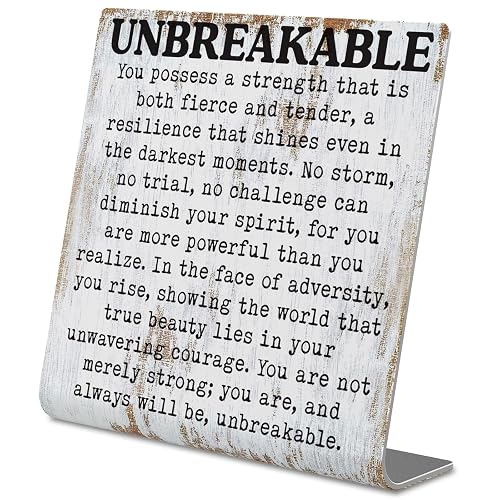
Motivational quote merchandise includes clothing, drinkware, wall art, stationery, and small accessories printed with encouraging phrases. These items are used for everyday reminders, gifts, or workspace and home decor. Compare product type, quote style, materials, print method, dimensions, and care requirements.
As an Amazon Associate we earn from qualifying purchases.
My fondness for “hardware stores when he needs nothing” is a small confession that I can mistake browsing for purpose. In How to Use the Quote Without Burning Out, I keep the check plain: when motivation runs low, I name the next necessary task, not an entire aisle of heroic nonsense.
This guide does not count every time Goggins has used this phrase in public.
Frequently Asked Questions
Who Said Who’s Gonna Carry the Boats?
David Goggins, a retired Navy SEAL, said it during Hell Week at BUD/S in Coronado, California. He shouted it at Boat Crew Two of Class 235 while the crew hauled its inflatable boat and teammates were dropping out. Goggins later made the phrase widely known through his speaking and his 2018 memoir.
What Does the Boat Represent?
Your own burden, whatever that happens to be. Writers on the phrase describe it as your business, your fitness goals, your personal demons, or the specific hard thing attached to your mission. Vagueness is deliberate, so that each person fills it in, and the metaphor only starts working once you do.
Is the Quote in Can’t Hurt Me?
The Hell Week experience behind the phrase features prominently in Can’t Hurt Me: Master Your Mind and Defy the Odds, published in 2018. Goggins treats that training as central to his philosophy throughout the book. Readers who want the boat carrying accounts will find them in the material on BUD/S.
How Heavy Are the Boats in BUD/S Training?
Over 200 pounds each, according to accounts of Hell Week boat crews. Crews carry them through deep sand and into the surf for long stretches, in cold conditions and on very little sleep. Weight is only part of the difficulty, since duration and cold do most of the damage.
Does the Phrase Work Outside the Gym?
Yes, and most of its use now sits outside the gym. Business, leadership, and personal development settings borrow it to name who takes on hard, unglamorous work that nobody is volunteering for. Keep the rule that made it work in training, though: the person asking should already be under the load.
Treat the line as an assignment rather than a slogan. Pick the boat you have been avoiding, say out loud who is carrying it, and set a finish point so the carry ends somewhere real. Goggins made the question famous by answering it himself, first and loudest, and that is the only part of it anybody actually has to copy.
References
- Who’s Gonna Carry the Boats?, Jon S. Rennie
- David Goggins, Wikipedia
- Boat Crew Two, Coach Dusseault
- Who’s Gonna Carry The Boats?, NASSA Silhouette
- Who’s Gonna Carry the Boats? A Deep Dive into Mental Fortitude, Birmingham Journal
Sources read in September 2026.